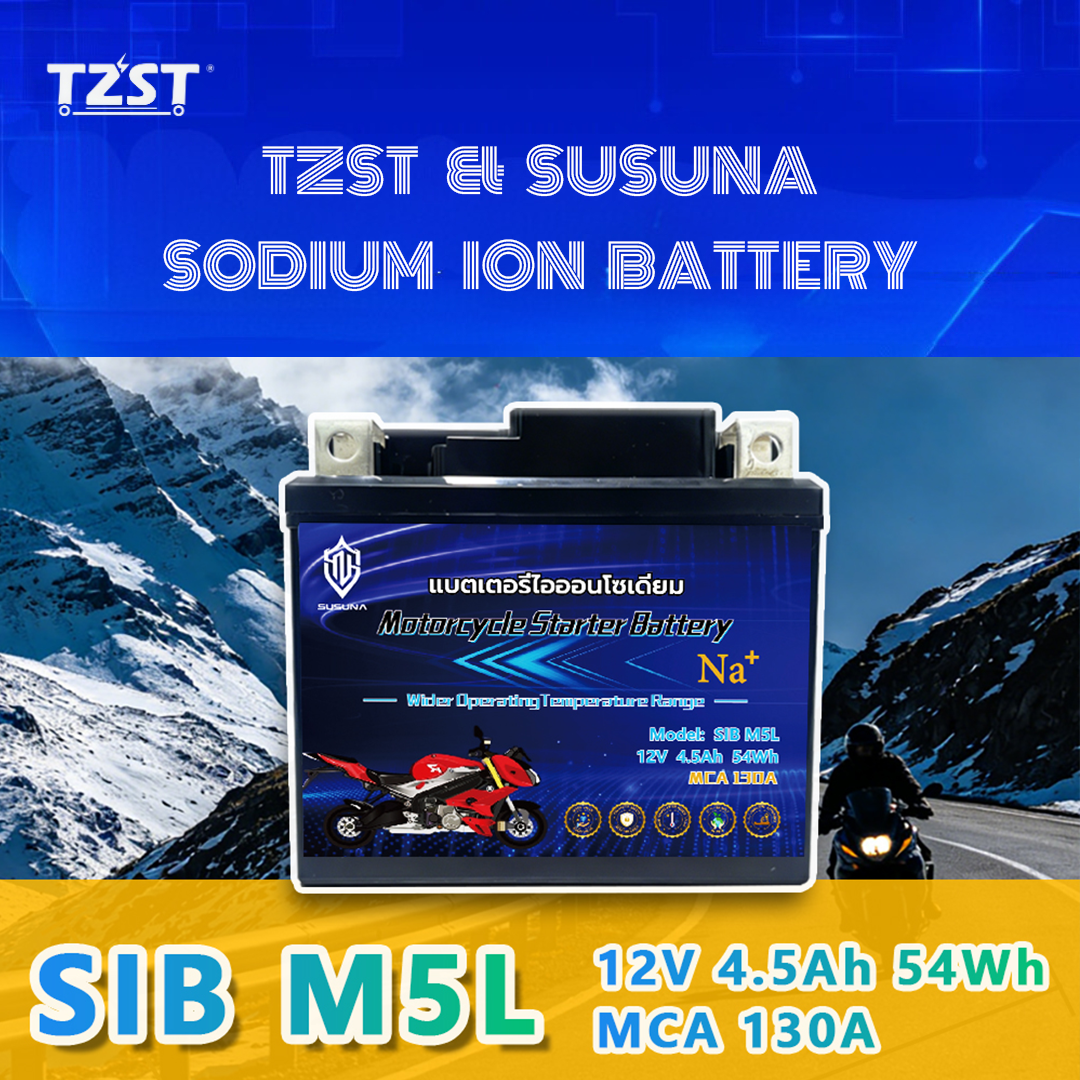
Thailand – May 2026 – In a landmark development for Southeast Asia’s two-wheeler energy transition, global sodium-ion battery manufacturer TZST has officially entered into a long-term strategic partnership with Susuna, one of Thailand’s most recognized mobility and automotive parts brands. Under the agreement, the first batch of customized sodium-ion motorcycle battery samples has arrived in Bangkok to begin multi-scenario pilot testing.
For decades, Thailand’s motorcycle battery market has been dominated by lead-acid products. In the country’s hot and humid climate—combined with inconsistent charging practices for older motorcycle models—lead-acid batteries typically last only 12 to 18 months. This results in high replacement costs for users and increasing toxic waste pressures on local environmental management systems.
The TZST–Susuna partnership aims to introduce high-performance sodium-ion motorcycle batteries to the Thai market, eliminate long-standing user pain points, and accelerate the modernization of Southeast Asia’s two-wheeler energy ecosystem.
Why Susuna Chose TZST’s Sodium-Ion Motorcycle Batteries
Susuna selected TZST as its exclusive sodium-ion motorcycle battery partner for Thailand based on clear, field-proven advantages that directly address the needs of riders, fleet operators, and after-sales networks. Over the past three years, Susuna’s nationwide retail channels have consistently recorded user complaints about lead-acid batteries, including rapid capacity loss during summer heat, frequent failures caused by overcharging, and long charging times that disrupt daily routines.
Following comprehensive technical evaluation, Susuna identified TZST’s product line as the most reliable and climate-adapted solution for the Thai market.
Key Advantages of Sodium-Ion Motorcycle Batteries in Thailand
High-Temperature Resilience
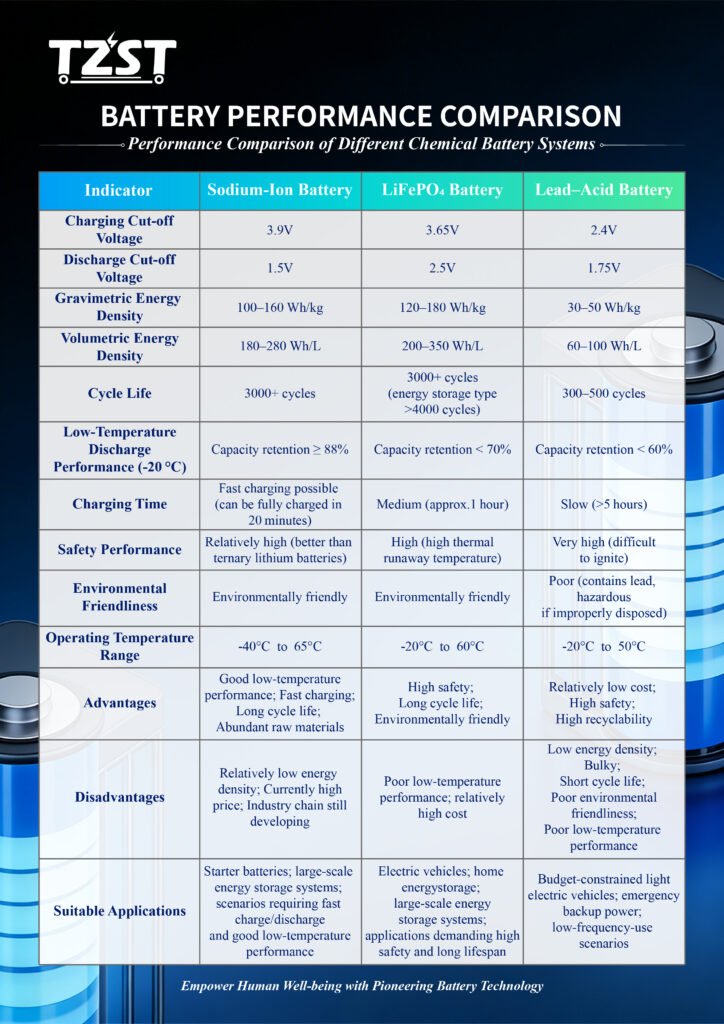
Thailand’s average annual temperature ranges from 28°C to 38°C, with inland provinces such as Khon Kaen and Nakhon Ratchasima frequently exceeding 42°C in summer. TZST’s sodium-ion motorcycle batteries are engineered for high-temperature resilience and typically deliver two to three times longer service life than lead-acid equivalents under real-world Thai operating conditions.
Overcharge Resistance
Unlike conventional lead-acid batteries, TZST’s sodium-ion batteries tolerate irregular charging behavior—one of the most common causes of premature battery failure in Thailand.
Cycle Life and Cost Efficiency
According to independent testing conducted by the Thai Clean Energy Research Institute in 2025, TZST’s sodium-ion motorcycle batteries achieve an average cycle life of approximately 3,000 charge–discharge cycles, compared to around 500 cycles for the most widely used lead-acid motorcycle batteries in Thailand. This translates to a service life roughly 6 times longer than lead-acid alternatives, reducing long-term ownership costs, despite a slightly higher upfront price.
Lightweight Design
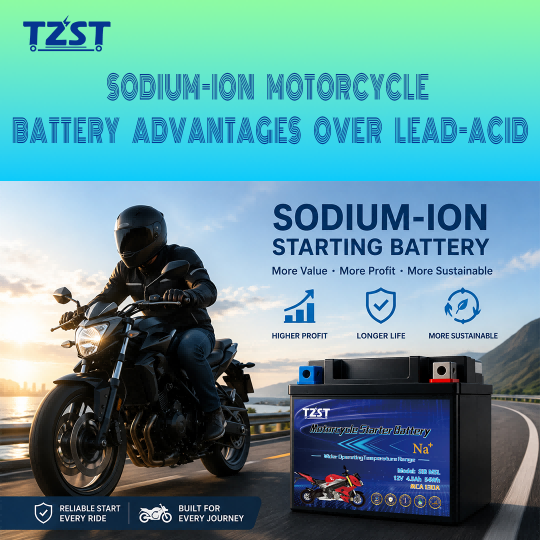
A 12V 4.5Ah sodium-ion motorcycle battery developed by TZST weighs just 0.7 kilograms, compared to approximately 2.3 kilograms for a comparable lead-acid unit—making it nearly 70% lighter. The reduced weight enhances motorcycle handling, lowers overall vehicle mass, and can improve fuel efficiency for gasoline-powered motorcycles.
Environmental Benefits
Sodium-ion batteries contain no lead or corrosive sulfuric acid, eliminating the risk of soil and water contamination associated with improper disposal of lead-acid batteries. Thailand currently generates millions of waste lead-acid batteries each year, and large-scale adoption of sodium-ion technology is expected to significantly reduce this toxic waste stream.
Low-Temperature Reliability
In northern regions such as Chiang Mai and Mae Hong Son, winter temperatures can fall to 5°C. At such temperatures, lead-acid batteries may lose up to half of their capacity, making cold starts difficult. By contrast, TZST’s sodium-ion batteries maintain stable performance and reliable starting capability across all climatic regions of Thailand.
Market Implications for Southeast Asia
This collaboration represents one of the region’s first major commercial pilot deployments of sodium-ion motorcycle batteries and signals a structural shift in the global two-wheeler battery market.
Unlike lithium-ion batteries, which rely on scarce and price-volatile lithium and cobalt resources, sodium-ion batteries use abundant sodium, ensuring greater supply stability and cost predictability. These characteristics make sodium-ion solutions particularly attractive for emerging markets across Southeast Asia, South Asia, Africa, and Latin America.
To meet anticipated regional demand, TZST plans to expand its sodium-ion motorcycle battery production capacity by 300% by the end of 2027.
For TZST, the partnership marks a strategic milestone in securing a strong foothold in Southeast Asia—one of the world’s largest and fastest-growing motorcycle markets.