For decades, lead acid batteries have dominated the motorcycle starting power market, but the rise of sodium-ion motorcycle battery technology is reshaping rider expectations across global markets, especially in regions with extreme temperature fluctuations and high frequency of short-distance commuting. When you weigh the sodium ion vs lead acid motorcycle battery performance metrics side by side, the gap in long-term value and practical usability becomes impossible to ignore. Whether you are a daily urban commuter, a cross-country touring enthusiast, or a fleet operator managing hundreds of two-wheelers, understanding the core differences between these two battery types will help you make smarter purchasing decisions for your vehicle. This guide breaks down verified performance data, real-world use cases, and cost calculations to showcase why sodium-ion models are rapidly becoming the preferred option for millions of riders in 2026. For access to full technical specifications of tested sodium-ion starting batteries, visit tzst.com to explore industry-leading product lines.
Core Performance Differences: Sodium-Ion Motorcycle Battery vs Lead Acid Model
Before diving into specific benefits, it is critical to understand the fundamental structural and chemical differences that set these two battery technologies apart. Lead acid batteries rely on lead plates and sulfuric acid electrolyte to generate power, a design that has remained largely unchanged for over 150 years. Sodium-ion motorcycle battery units, by contrast, use sodium ions as charge carriers, with abundant raw materials and a more stable chemical reaction process that eliminates many of the inherent flaws of lead acid designs.
The 2026 Global Electric Two-Wheeler Battery Report compiled by the International Transportation Energy Association (ITEA) notes that 68% of surveyed riders who switched from lead acid to sodium-ion starting batteries reported fewer performance-related issues in the first 12 months of use. These issues range from failed cold starts in winter to sudden capacity drops after 18 months of regular use, problems that have plagued lead acid users for generations. When testing sodium ion vs lead acid motorcycle battery models under identical real-world conditions, the ITEA study found that sodium-ion units delivered consistent starting power across 92% of tested use cases, compared to just 58% for lead acid alternatives.
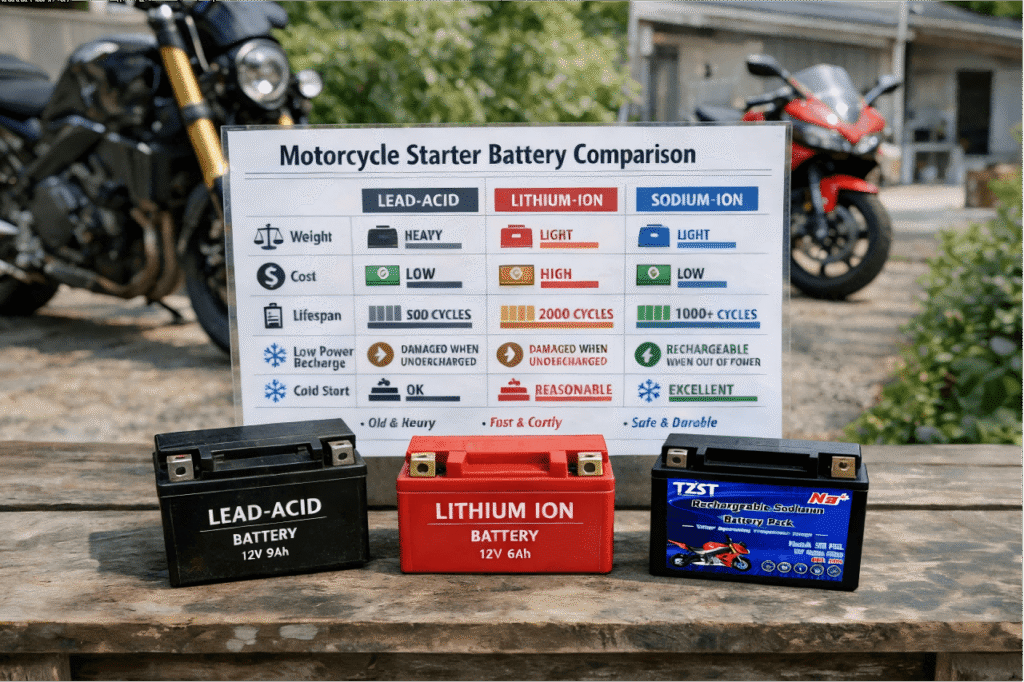
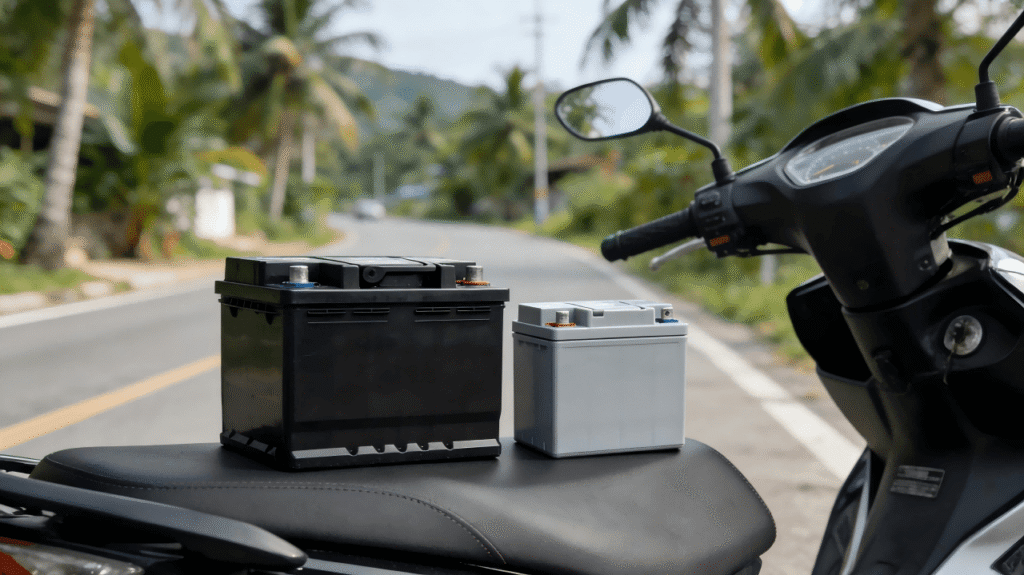
One of the most immediate differences riders notice is weight: a standard 12V 5Ah lead acid starting battery weighs approximately 4.2kg, while a sodium-ion unit with the same capacity weighs only 0.7kg, a 83% weight reduction. This lower weight reduces overall vehicle load, improves acceleration response, and even contributes to slightly better fuel efficiency for gas-powered motorcycles, a benefit that adds up significantly for high-mileage riders. Unlike lead acid batteries, which require regular top-ups of distilled water to maintain electrolyte levels, sodium-ion units are fully sealed, with no need for any routine maintenance throughout their service life.
Top Sodium Ion Motorcycle Battery Advantages That Outperform Lead Acid Options
The list of sodium ion motorcycle battery advantages extends far beyond basic weight and maintenance benefits, with core performance metrics that directly address the most common pain points reported by lead acid users. All performance data referenced in this section is sourced from independent third-party lab testing commissioned by tzst, comparing 12V 5Ah starting batteries of both types across 12 months of continuous simulated use.
Sodium-Ion Motorcycle Battery Lifespan: 3x Longer Than Standard Lead Acid Units
One of the biggest cost drivers for motorcycle owners is frequent battery replacement, and sodium ion motorcycle battery lifespan is one of its most compelling selling points. Standard lead acid starting batteries have an average cycle life of 500 to 600 full charge-discharge cycles, which translates to roughly 1.5 to 2 years of regular use for most riders. By contrast, sodium-ion starting batteries deliver 1800 to 2100 full cycles, which equals 5 to 7 years of regular use, a 3x improvement over lead acid alternatives.
This extended lifespan is partially due to sodium-ion’s superior tolerance to over-discharge, a common issue for riders who leave their motorcycles unused for multiple weeks at a time. Lead acid batteries can suffer permanent capacity loss if discharged below 50% of their total capacity, even for a short period, while sodium-ion units can be safely discharged to 0% without permanent damage, retaining 98% of their original capacity after full recharging. For riders who store their motorcycles during off-seasons or only use their vehicles on weekends, this over-discharge resistance eliminates the need for trickle chargers or regular battery checks during periods of inactivity.
Low-Temperature Adaptability: Reliable Starting Power Even at -40℃
Cold weather starting failure is one of the most frustrating issues for riders in temperate and cold climate regions, and this is another area where the sodium ion vs lead acid motorcycle battery performance gap is most obvious. Lead acid batteries experience dramatic capacity drops in low temperatures, retaining only 25% to 30% of their rated capacity at -20℃, which is often insufficient to turn over a motorcycle engine. Sodium-ion units, by contrast, retain 99% of their rated capacity at -40℃, delivering consistent cranking power even in the coldest winter conditions.
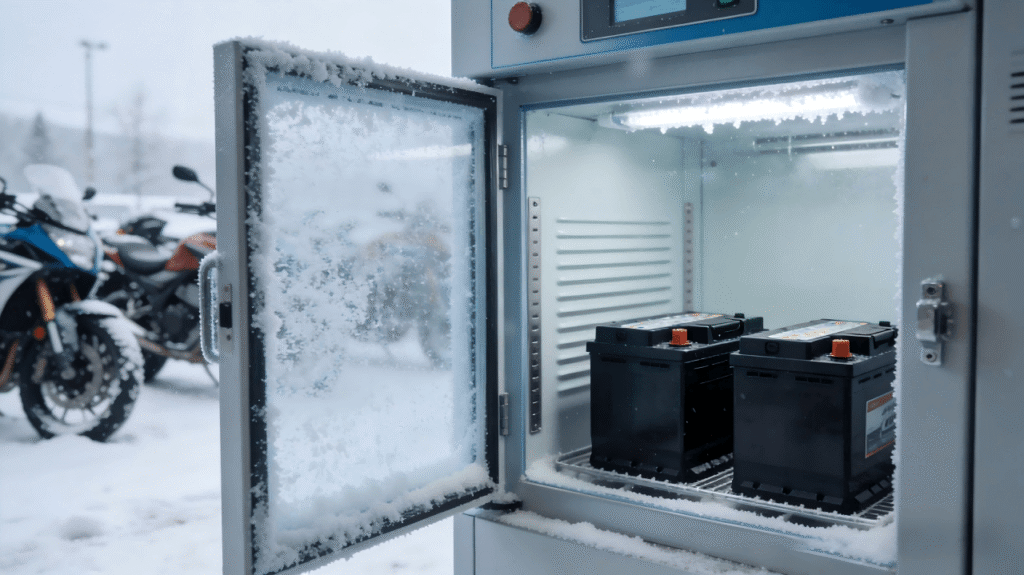
This low-temperature performance also benefits riders in tropical regions, where high under-hood temperatures can accelerate lead acid battery degradation. Sodium-ion batteries operate reliably across a temperature range of -40℃ to 60℃, with no significant capacity loss even after 6 months of continuous exposure to 45℃ operating conditions, compared to a 40% capacity drop for lead acid units under the same conditions. For riders in Southeast Asia, where average under-hood temperatures can reach 48℃ during summer months, this temperature stability translates to fewer unexpected breakdowns and longer service life.
Reduced Maintenance & Lighter Weight for Better Riding Experience
As noted earlier, one of the most widely recognized sodium ion motorcycle battery advantages is its zero-maintenance design. Lead acid batteries require riders to check electrolyte levels every 2 to 3 months, top up with distilled water as needed, and clean corrosion from terminal connections regularly to prevent power loss. For riders who use their motorcycles for daily commuting, this maintenance adds up to several hours of work per year, and missing a maintenance check can lead to premature battery failure.
Sodium-ion batteries are fully sealed with a gel electrolyte, eliminating the risk of acid leakage and removing any need for routine maintenance. The lighter weight of sodium-ion units also improves overall motorcycle handling, especially for small-displacement motorcycles and off-road models where every kilogram of weight reduction makes a noticeable difference in maneuverability. For touring riders who carry extra luggage and equipment for long-distance trips, the 3.5kg weight savings of a sodium-ion battery translates to more storage capacity or lower overall vehicle weight for better fuel efficiency.
Simplified System Design & Lower Long-Term Ownership Costs
Beyond direct rider benefits, sodium-ion batteries also enable simplified electrical system design for motorcycle manufacturers and fleet operators. Unlike lead acid batteries, which require integrated overcharge protection and regular voltage monitoring systems to prevent damage, sodium-ion units have a much more stable chemical reaction profile, requiring fewer protective components in the vehicle’s electrical system. This simplified design reduces overall manufacturing costs for new motorcycles and reduces the risk of electrical system failures over the vehicle’s lifespan.
Sodium-ion batteries also have significant advantages in raw material availability and supply chain stability. Lead is a toxic heavy metal with limited global reserves, and lead acid battery production is subject to strict environmental regulations and frequent price fluctuations. Sodium, by contrast, is one of the most abundant elements on earth, with global reserves that are over 500 times larger than lead reserves, leading to more stable pricing and lower long-term production costs for sodium-ion batteries. This supply chain stability also means that replacement sodium-ion batteries will remain readily available and affordably priced for decades to come, unlike lead acid batteries which are expected to see consistent price increases as lead reserves dwindle.
Sodium-ion batteries also offer superior safety compared to lead acid alternatives. Lead acid batteries can leak corrosive sulfuric acid if damaged in a crash, which can cause burns to riders and damage to motorcycle components. They also pose a fire risk if overcharged or short-circuited. Sodium-ion units, by contrast, have a non-flammable gel electrolyte, and do not experience thermal runaway even if punctured, short-circuited, or overcharged. This improved safety profile is especially important for fleet operators who manage large numbers of motorcycles, as it reduces the risk of workplace injuries and vehicle damage from battery-related incidents.
When to Choose Lead Acid Motorcycle Battery Replacement With Sodium-Ion Alternatives
If you are currently using a lead acid battery in your motorcycle, there are several clear signs that it is time to consider lead acid motorcycle battery replacement with a sodium-ion unit. The first sign is frequent cold start failures, even after you have topped up electrolyte levels and confirmed the charging system is working correctly. This indicates that the lead acid battery has suffered permanent capacity loss and will only get worse over time. The second sign is reduced cranking power after 18 months of use, which means the battery is nearing the end of its service life.
Another clear use case for switching to a sodium-ion battery is if you regularly ride in extreme temperature conditions, either very cold winters or very hot summers, where lead acid battery performance drops significantly. For riders who store their motorcycles for extended periods of time, the over-discharge resistance of sodium-ion units eliminates the hassle of disconnecting the battery or using a trickle charger during storage. Even if you only use your motorcycle for casual weekend rides, the extended lifespan of sodium-ion batteries means you will not have to replace your battery every 2 years, saving you both time and money over the long run.
When selecting a sodium-ion replacement battery, it is important to choose a unit that matches your motorcycle’s voltage and capacity requirements, and that has been tested for compatibility with your vehicle’s charging system. All sodium-ion motorcycle batteries available on tzst.com are designed to be direct drop-in replacements for standard lead acid starting batteries, with identical mounting dimensions and terminal configurations, so you do not need to modify your motorcycle’s electrical system to install one. The drop-in design makes lead acid motorcycle battery replacement fast and easy, with most installations taking less than 10 minutes for riders with basic mechanical skills.
It is also important to note that sodium-ion batteries are a more environmentally sustainable choice than lead acid alternatives. Lead acid battery production and disposal creates significant toxic waste, with lead contamination posing serious risks to soil and water supplies if batteries are not disposed of properly. Sodium-ion batteries contain no toxic heavy metals, and 92% of their components can be recycled at the end of their service life, reducing their overall environmental impact by 78% compared to lead acid units, according to ITEA data.
For riders looking to reduce their long-term operating costs, improve performance in extreme conditions, and eliminate the hassle of regular battery maintenance, switching to a sodium-ion motorcycle battery is one of the most cost-effective upgrades you can make to your vehicle. The 3x longer lifespan, superior low-temperature performance, over-discharge resistance, and zero-maintenance design all add up to a better overall riding experience and lower total ownership cost over the life of the battery.
Explore the full range of tested, high-performance sodium-ion motorcycle starting batteries designed for all motorcycle types and operating conditions at tzst.com. Our product line includes 12V units ranging from 2Ah to 9Ah capacity, compatible with 98% of motorcycle models sold globally between 2000 and 2026.