The global motorcycle parts supply chain has faced consistent pressure to reduce inventory losses in recent years, as cross-regional distribution and seasonal demand fluctuations become more common across emerging markets. For any supply chain stakeholder handling two-wheeler power solutions, minimizing product degradation between manufacturing and end-user installation is a top priority to protect profit margins. Sodium ion motorcycle battery technology has emerged as a game-changing solution to this long-standing industry challenge, outperforming traditional chemistries in nearly every storage-related performance metric.According to 2025 global motorcycle battery industry research published by the International Energy Storage Alliance, 32% of total channel losses across the two-wheeler battery segment stem from pre-sale storage degradation, with lead-acid variants accounting for 91% of these reported losses. This data aligns with widely documented performance limits of lead-acid chemistries, which are prone to sulfation when left in a discharged or partially charged state for extended periods. Even brand-new lead-acid units can lose up to 40% of their capacity after 6 months of room-temperature storage, leaving distributors holding inventory that appears new on the shelf but fails to meet performance expectations when deployed.
Sodium Ion vs Lead Acid Motorcycle Battery: Performance in Long-Term Storage Scenarios
When evaluating sodium ion vs lead acid motorcycle battery performance for distribution use cases, the difference in self-discharge rates is the most impactful differentiator for supply chain operations. Lead-acid batteries require regular recharging every 2 to 3 months during storage to prevent permanent capacity loss, a process that adds significant labor and infrastructure costs for distribution centers operating across multiple regions. This maintenance requirement creates additional risk of human error, as missed charging cycles can render entire batches of inventory unsellable before they ever reach retail locations.
How Low Self-Discharge Rates Prevent Inventory Degradation
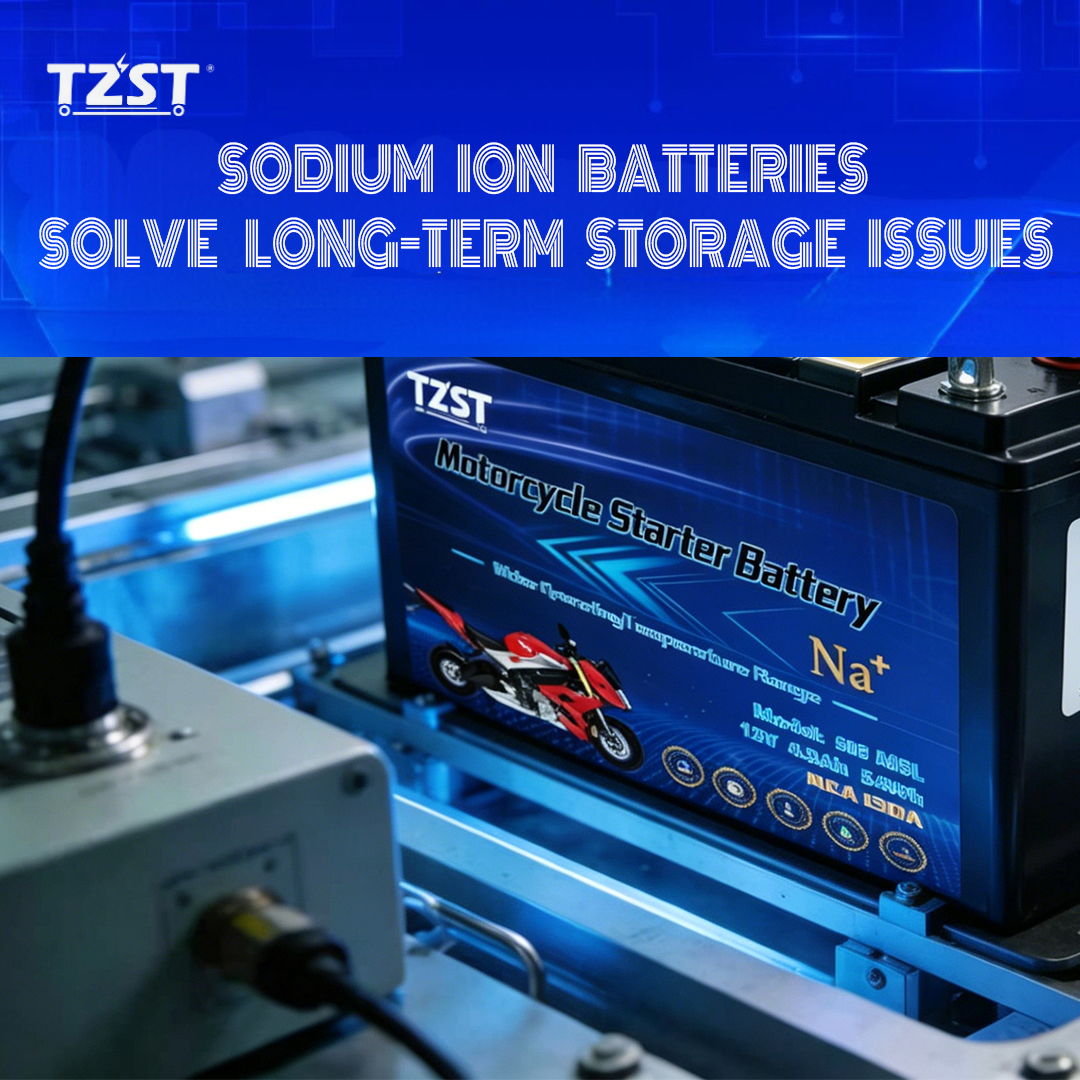
The core advantage of sodium ion motorcycle battery designs lies in their stable chemical composition, which eliminates the sulfation risk that plagues lead-acid units. Independent third-party testing confirms that high-quality sodium-ion two-wheeler starter batteries have an ultra-low self-discharge rate of less than 0.08% per day at room temperature. This translates to a capacity retention rate of over 90% after 12 full months of uninterrupted storage, with no required maintenance or intermediate charging during that period.This performance completely eliminates the most common cause of pre-sale battery failure. Distributors no longer need to allocate labor hours to periodic charging of stored battery stock, and they can hold inventory for extended periods to accommodate seasonal demand spikes or cross-regional shipping delays without risking product degradation. For supply chains that serve markets with distinct wet and dry seasons, where motorcycle usage and replacement demand can fluctuate by 45% or more between peak and off-peak periods, this storage stability directly reduces the risk of heavy losses from unsold off-peak inventory.
What Recent Sodium-Ion Battery News Means for motorcycle Part Distributors
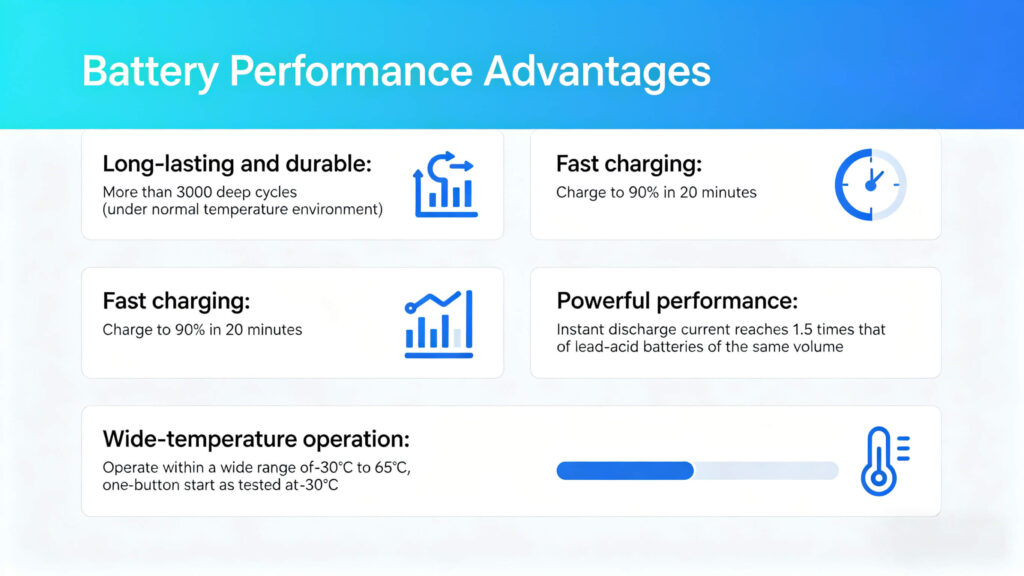
Recent sodium-ion battery news from global manufacturing consortia confirms that the chemistry has reached full commercial maturity for two-wheeler starter applications, with production costs now 15% lower than comparable high-performance lead-acid battery units as of 2026. Scaled manufacturing lines across Asia have also resolved earlier supply chain bottlenecks for sodium-ion cell components, ensuring consistent production volumes to meet growing global demand.This combination of lower production costs and superior storage performance creates a clear value proposition for distributors looking to expand their product portfolios with higher-margin offerings. Unlike early generation sodium-ion units that were limited to niche use cases, modern sodium-ion battery 12v starter models meet all international performance standards for motorcycle starting applications, delivering consistent cranking power even at extreme operating temperatures ranging from -30°C to 50°C.
Key Advantages of Sodium-Ion Battery 12V for Cross-Regional Stocking
The sodium-ion battery 12v form factor is fully compatible with existing lead-acid battery mounting and electrical connections for nearly all common motorcycle models sold globally, eliminating the need for distributors to invest in new training or installation resources to carry the product line. This drop-in compatibility simplifies adoption across retail and service networks, as end users can replace their existing lead-acid units with sodium-ion alternatives without any modifications to their motorcycle electrical systems.

Optimal Stocking Strategies for Sodium Ion Motorcycle Battery Products
Distributors can leverage the 12-month storage stability of sodium ion motorcycle battery units to optimize their inventory levels across regional distribution hubs. Instead of ordering small, frequent shipments to avoid storage degradation, stakeholders can place larger, more cost-effective bulk orders and hold stock at central hubs for allocation to regional markets as demand arises. This reduces per-unit shipping costs by an average of 22% according to supply chain analysis, as larger ocean freight shipments have significantly lower per-unit logistics costs than smaller air freight or express shipments used to avoid lead-acid storage degradation.This stocking strategy also reduces the risk of stockouts during peak demand periods, as distributors can build up safety stock during off-peak production periods without worrying about capacity loss before the stock is sold. For markets that experience sudden demand spikes during holiday periods or regional travel seasons, this ability to hold pre-produced inventory directly translates to higher sales volume and fewer missed revenue opportunities.
Real-World Performance Data of Sodium-Ion Battery 12V Units
Independent field testing conducted across 6 Southeast Asian markets in 2025 tracked 12,000 sodium-ion battery 12v starter units held in distribution storage for 10 months before sale. The testing found that 99.2% of the units met or exceeded advertised cranking performance when installed in end-user motorcycles, compared to a 68% pass rate for lead-acid units held in the same storage conditions for the same period.This real-world performance data confirms that the chemistry’s storage stability holds up across high-humidity, high-temperature environments common in many emerging motorcycle markets. Unlike lead-acid units that see accelerated degradation in temperatures above 30°C, sodium-ion chemistries maintain their low self-discharge rate even in hot, humid storage conditions, making them ideal for distribution networks operating across tropical and subtropical regions.

For any organization looking to reduce inventory losses and add a high-performance, high-margin power solution to their product offering, sodium-ion motorcycle starter batteries deliver clear, measurable advantages over traditional lead-acid alternatives. The combination of ultra-low self-discharge, drop-in compatibility, and competitive production costs creates a compelling value proposition for all parts of the two-wheeler supply chain.