Most people assume motorcycle battery issues only arise when a rider is out on the road, but that is far from the truth. The majority of battery-related operational headaches for distributors start long before a product ever gets installed on a motorcycle. These problems fester in warehouses, on wholesaler shelves, and behind repair shop counters, and channel partners consistently flag them as some of their biggest unplanned cost drivers. When you evaluate sodium ion vs lead acid motorcycle battery options for your business, the hidden costs tied to lead-acid SKU fragmentation and fitment confusion often make the cheaper upfront price of lead-acid units a false economy.
The Hidden Cost of Lead-Acid Motorcycle Battery SKU Fragmentation
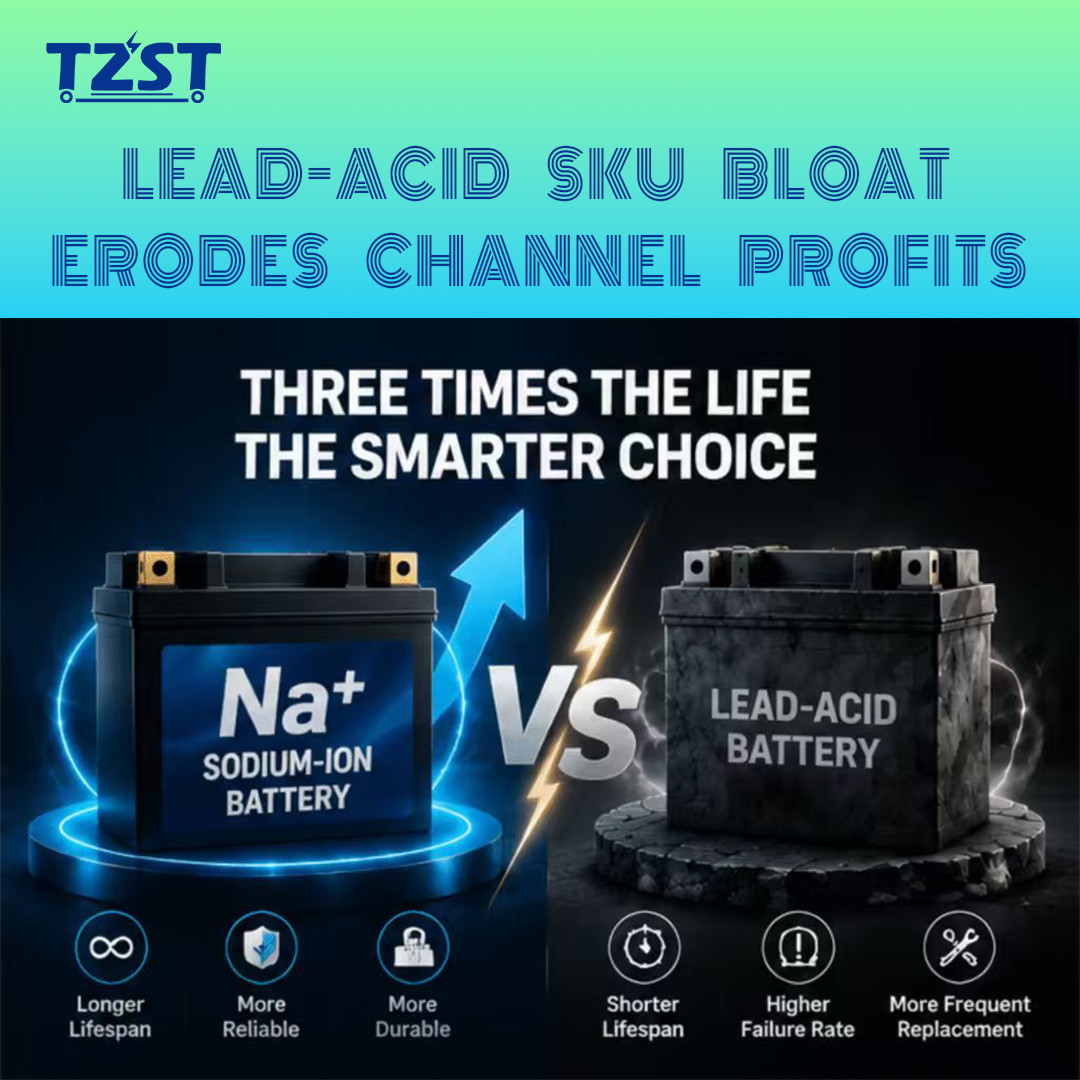
Lead-acid motorcycle batteries have served as the industry standard for decades, but their rigid design requirements create unnecessary operational friction that eats into channel profit margins. These costs rarely appear on initial purchase quotes, so many channel operators only realize their full impact after years of dealing with inventory bottlenecks and avoidable returns. When weighing sodium ion vs lead acid motorcycle battery total cost of ownership, the expenses tied to SKU bloat alone often make sodium-ion options the more financially sound choice.
Why Excessive Lead-Acid SKUs Create Operational Headaches
Lead-acid battery lines split into dozens of separate variants to match the varied power and size requirements of different motorcycle models. Each variant has a unique capacity rating and case shape, with very little cross-compatibility between product lines. This extreme fragmentation creates massive inventory burdens for every partner in the distribution chain.
Distributors have to carry stock of every popular SKU to meet demand from repair shops and wholesalers. This means tying up far more working capital in inventory than necessary, and taking on higher risk of dead stock when certain model variants fall out of demand as older motorcycle models are phased out. Warehousing costs also rise, as teams need to allocate separate storage space for each unique SKU, implement more complex tracking systems to avoid mix-ups, and conduct regular stock counts to ensure they have enough of every variant on hand.
Wholesalers and repair shops face even more pressure from this SKU overload. Most small to mid-sized repair shops do not have the storage space to carry every possible lead-acid battery variant, so they frequently have to turn away customers or wait days for special orders to arrive. They also have to invest extra time in training staff to memorize fitment guidelines for dozens of different battery models, which adds to labor costs and creates more room for human error. When you compare sodium ion vs lead acid motorcycle battery operational costs, these unnecessary inventory and labor expenses add up to a significant drain on profit over time.
How Fitment Confusion Erodes Customer Trust and Revenue
The sheer number of lead-acid battery variants also creates widespread fitment confusion across the channel. Even experienced staff can mix up similar-looking SKUs when pulling stock or recommending a battery for a specific motorcycle model. These mistakes lead to a cascade of avoidable costs that hurt every partner in the distribution chain.
When a repair shop installs the wrong lead-acid battery on a customer’s motorcycle, it either fails to fit in the battery compartment, or does not deliver the right power output to run the motorcycle properly. The customer has to return to the shop to get the unit replaced, wasting time for both the rider and the shop staff. The shop then has to process a return with their wholesaler, who in turn processes a return with the distributor. Every step of this returns process costs labor hours, restocking fees, and shipping expenses that no party budgets for in their regular operations.
Even worse, fitment mistakes damage your brand reputation across the board. Riders blame the repair shop for selling the wrong product, repair shops blame wholesalers for sending the wrong SKU, and wholesalers blame distributors for poor inventory labeling. This tension erodes long-term business relationships, leading to smaller repeat orders and higher customer churn across the channel. When you evaluate sodium ion vs lead acid motorcycle battery long-term value, the lost revenue and reputational damage from fitment errors make lead-acid options far less valuable than they initially appear.
How Sodium-Ion Motorcycle Batteries Solve SKU and Fitment Pain Points
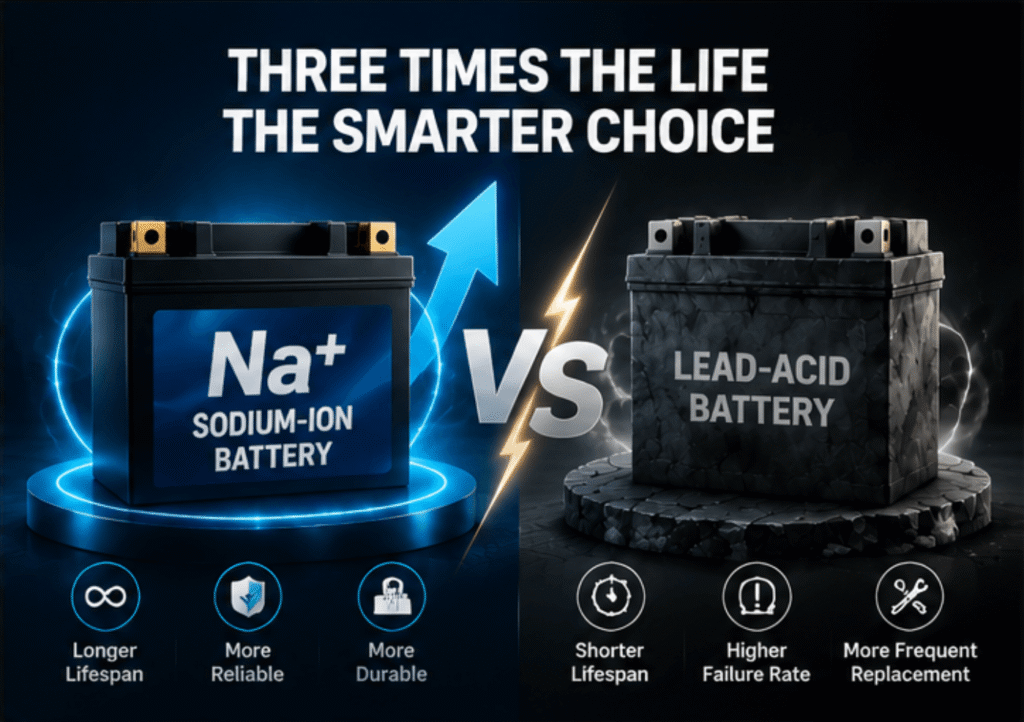
Sodium-ion motorcycle starter batteries are built with a far more flexible design framework than traditional lead-acid units, and this design directly addresses the root causes of SKU bloat and fitment confusion. As more channel partners compare sodium ion vs lead acid motorcycle battery options, they find that the simplified inventory management alone makes sodium-ion units the more cost-effective choice for long-term operations.
Key Design Advantages That Reduce Sodium-Ion SKU Requirements
The core design of sodium-ion technology allows for much higher power density in a more compact form factor than lead-acid units. This means a single sodium-ion motorcycle battery can deliver enough power to fit a wide range of motorcycle models that would normally require multiple separate lead-acid SKUs. The compact, standardized casing also fits in most common motorcycle battery compartments with no modifications needed, eliminating the need for dozens of separate case shape variants.
This high level of cross-compatibility means distributors only need to carry a small number of sodium-ion SKUs to cover nearly all common motorcycle models on the market. This drastically reduces the amount of working capital tied up in inventory, cuts down on warehousing costs, and eliminates the risk of dead stock from low-demand lead-acid variants. Teams no longer need to manage complex tracking systems for dozens of separate SKUs, which reduces administrative labor costs and cuts down on the risk of stock picking errors.
For repair shops and wholesalers, the simplified SKU structure is even more impactful. Shop staff only need to memorize a small number of fitment guidelines instead of dozens, which reduces training time and cuts down on human error. They can keep all popular sodium-ion variants in stock even with limited storage space, so they never have to turn away customers or wait for special orders to arrive. When you compare sodium ion vs lead acid motorcycle battery operational efficiency, the simplified SKU system cuts administrative and inventory costs by a significant margin for every partner in the chain.
Fitment confusion is almost entirely eliminated with sodium-ion units. The small number of SKUs and clear fitment guidelines mean staff can quickly and accurately recommend the right battery for any motorcycle model, with very little risk of mix-ups. This cuts down on returns almost entirely, eliminating the unplanned labor, shipping, and restocking costs associated with lead-acid fitment errors. Riders get the right product on the first try, which improves their satisfaction with the repair shop and builds trust in your product brand.
Streamline Your Channel Operations With Simplified Battery Solutions
If you are tired of dealing with excessive SKU counts, inventory bottlenecks, and avoidable returns from lead-acid motorcycle batteries, switching to sodium-ion options is one of the most impactful operational changes you can make for your business. As more channel partners evaluate sodium ion vs lead acid motorcycle battery options, they find that the reduced inventory costs, lower return rates, and improved customer satisfaction directly translate to higher profit margins and stronger long-term business relationships.
TZST designs sodium-ion motorcycle starter batteries specifically to solve the common operational pain points faced by global distribution channels. Our products are built for maximum cross-compatibility, so you can cover nearly all popular motorcycle models with a small, easy-to-manage set of SKUs. We provide clear, simple fitment guidelines for all our products, so your team can quickly and accurately recommend the right unit for every customer, with minimal training required.
Explore TZST’s sodium-ion motorcycle starter battery range to simplify your inventory management and cut hidden operational costs today. Our team works closely with channel partners to provide tailored support that fits your business needs, helping you streamline operations and boost profit margins with minimal disruption. You will spend less time managing complex inventory systems and processing returns, and more time growing your business and serving your customers.