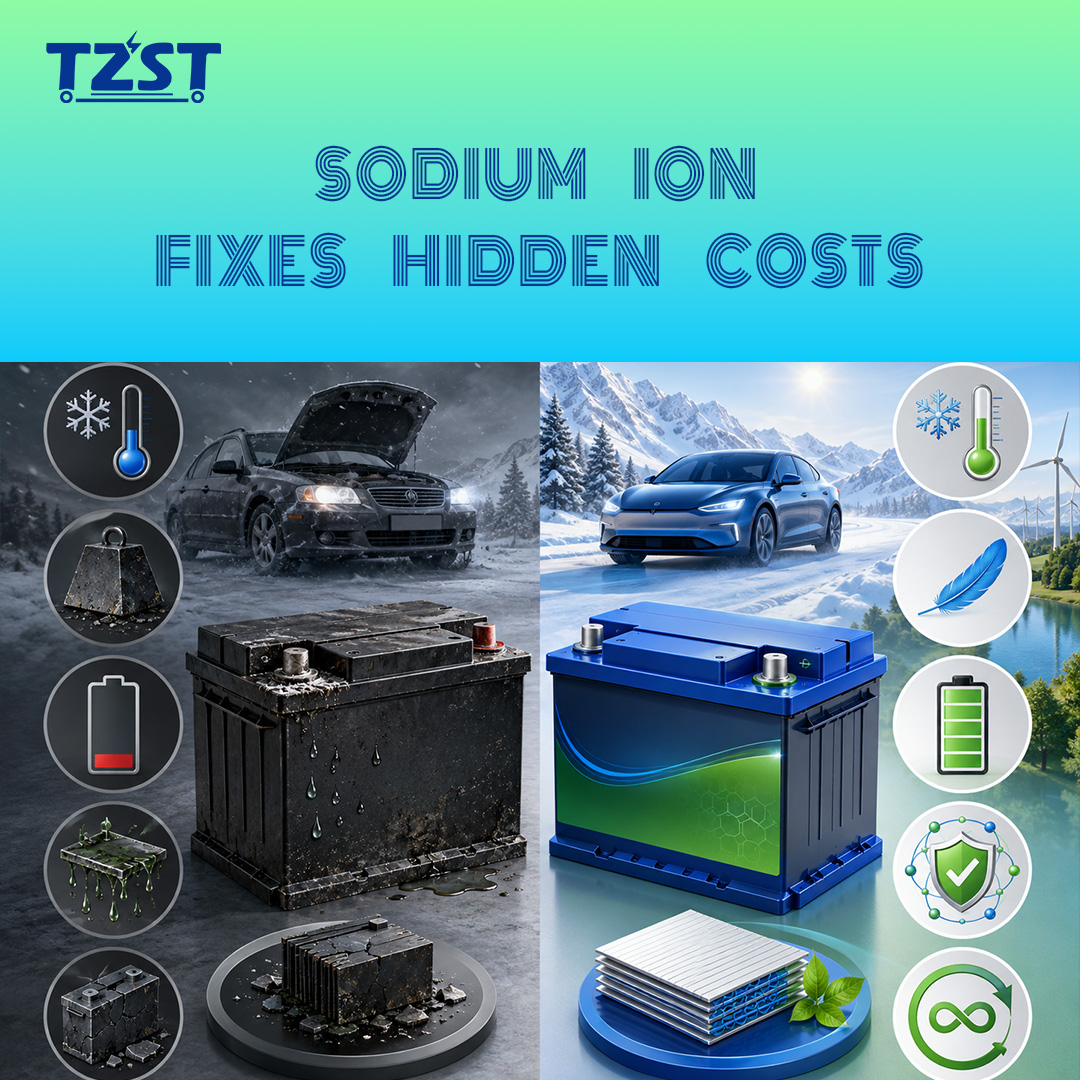
Most people assume motorcycle battery issues only pop up when a rider hits the road, but that is not the case. The majority of battery-related headaches start long before a product reaches a rider’s motorcycle. They begin in storage warehouses, on wholesaler shelves, and behind repair shop counters, and distributors consistently flag these off-road issues as their biggest operational pain points. When you evaluate sodium ion vs lead acid motorcycle battery options for your channel, understanding these hidden costs can help you make a choice that drives long-term profit and reduces operational friction.
Unseen Lead-Acid Motorcycle Battery Risks Off The Road
Lead-acid motorcycle batteries have been the standard option for decades, but their inherent design creates a range of unplanned costs for distributors, retailers, and repair partners that rarely show up on initial cost sheets. These costs accumulate slowly over time, and many channel operators only realize their impact once they start switching to more stable battery alternatives. When weighing sodium ion vs lead acid motorcycle battery value, these hidden costs often make lead-acid options far more expensive than their lower upfront price suggests.
Why Frequent After-Sales Disputes Drain Your Channel Revenue
One of the costliest hidden risks of lead-acid motorcycle batteries is the high rate of after-sales disputes that arise between channel partners and end users. Unlike many other motorcycle parts, lead-acid battery failures are often vague and hard to trace to a single cause. A battery that stops working shortly after purchase could have failed due to improper storage in the warehouse, mishandling during transport, incorrect installation at the repair shop, or even user error after purchase.
This lack of clear fault attribution creates tension at every step of the distribution chain. Distributors face pushback from wholesalers who receive batches of batteries that do not work as expected. Repair shops get complaints from riders who believe their newly purchased battery is defective, even if the issue stems from how the rider uses or maintains the unit. All parties spend hours addressing complaints, negotiating resolutions, and replacing units to keep customers happy, even when no single party is clearly at fault for the failure.
These disputes do not just cost time. They damage trust between channel partners, leading to smaller repeat orders and lost long-term business. They also hurt your reputation among end users, who may associate your brand with low-quality products even if the issue stems from the inherent limitations of lead-acid technology. When you compare sodium ion vs lead acid motorcycle battery total cost of ownership, these dispute-related losses make up a large portion of the extra expense that comes with lead-acid options.
Common Root Causes Of Lead-Acid Battery Disputes
Understanding the root causes of these vague failures helps explain why lead-acid options create so much conflict for distribution channels. First, lead-acid batteries have strict storage requirements. They degrade quickly if stored in extreme temperatures, or left on shelves for too long without a maintenance charge. Many warehouses do not have the specialized storage conditions needed to keep lead-acid batteries in optimal condition, so units can lose a significant portion of their capacity before they even leave the warehouse. Most channel teams do not have the tools to test battery capacity before shipping, so they unknowingly send out degraded units that fail shortly after installation.
Second, lead-acid batteries are sensitive to installation and use errors. A small mistake during installation, or a consistent pattern of undercharging from the rider’s motorcycle charging system, can cause the battery to fail far earlier than expected. Most end users do not know these nuances, so they automatically assume the battery itself is defective when it stops working. This leads to unfair complaints to repair shops and distributors, who have no easy way to prove the failure was caused by use or installation error rather than product defects.
Finally, lead-acid batteries show very few warning signs before they fail. A battery that works perfectly one day may be completely dead the next, with no prior indication of an issue. This sudden failure leaves riders stranded, and makes them far more likely to file angry complaints than they would be if the battery showed gradual signs of degradation. All these factors combine to create a steady stream of avoidable disputes that drain resources and hurt profitability for every partner in the distribution chain. When you evaluate sodium ion vs lead acid motorcycle battery performance, the stable, predictable nature of sodium-ion units eliminates almost all these root causes of conflict.
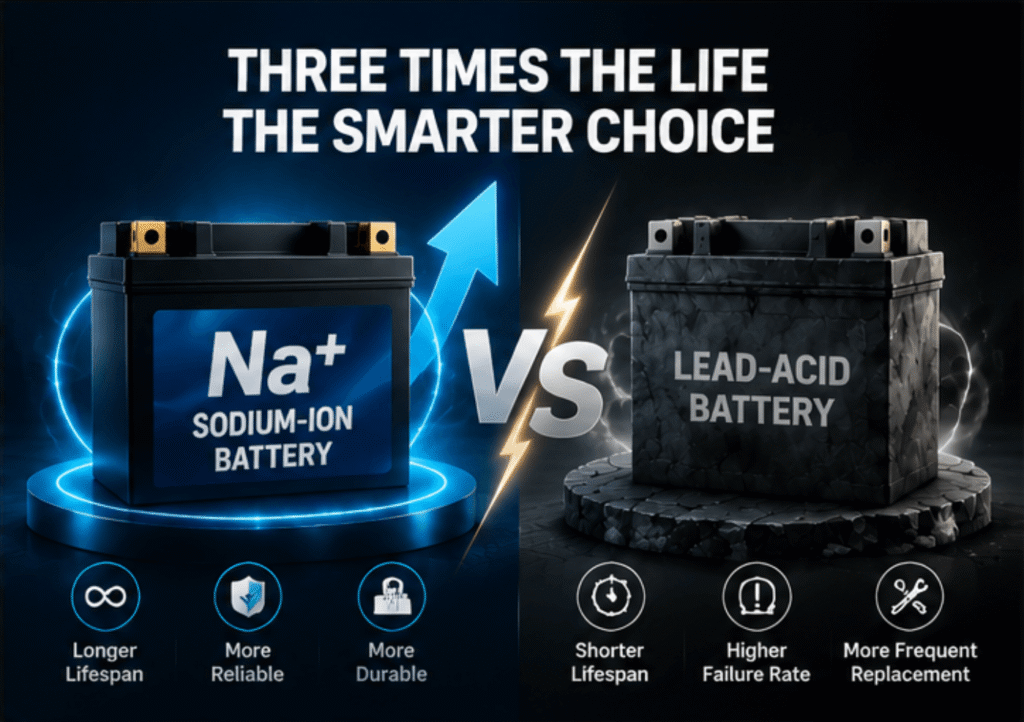
How Sodium-Ion Motorcycle Batteries Eliminate After-Sales Headaches
Sodium-ion motorcycle starter batteries are a newer alternative to lead-acid options, and their design addresses almost all the flaws that create after-sales disputes for lead-acid units. As more channel partners evaluate sodium ion vs lead acid motorcycle battery options, they find that the lower after-sales friction alone makes sodium-ion units the more cost-effective choice for long-term operations.
Key Advantages Of Sodium-Ion Options For Distribution Channels
First, sodium-ion batteries have far more flexible storage requirements than lead-acid units. They can be stored for much longer periods without maintenance charging, and are far more tolerant of temperature fluctuations during storage and transport. This means batteries stay in optimal condition even if they sit on warehouse or wholesaler shelves for extended periods. Degradation during storage is extremely rare, so you can be confident that every unit you ship works as expected when it reaches the end user. This eliminates the vast majority of disputes that stem from pre-installation degradation.
Second, sodium-ion batteries are far more tolerant of common use and installation errors. They are less sensitive to undercharging, overcharging, and small installation mistakes that would cause a lead-acid battery to fail early. Even if a rider does not follow perfect maintenance practices, the battery will still deliver consistent performance for its intended lifespan. When issues do occur, they follow clear, predictable patterns that make it easy to identify whether the problem stems from product defect, installation error, or user misuse. This clear fault attribution means all parties can resolve issues quickly, with no need for lengthy negotiations or arguments over who is responsible for the failure.
Third, sodium-ion batteries show clear warning signs before they reach the end of their lifespan. Riders and repair shops can see gradual drops in performance well before the battery stops working entirely, so they can plan replacements ahead of time. This eliminates the sudden, unexpected failures that leave riders stranded and lead to angry complaints. When you compare sodium ion vs lead acid motorcycle battery operational costs, the reduction in dispute resolution time, replacement costs, and reputation damage makes sodium-ion units a far more valuable choice for channel partners.
Choose Reliable Battery Solutions For Your Channel
If you are tired of dealing with endless after-sales disputes and hidden costs from lead-acid motorcycle batteries, switching to sodium-ion options is one of the most impactful changes you can make for your business. As more distributors and repair shop operators evaluate sodium ion vs lead acid motorcycle battery options, they find that the stable performance and low dispute rate of sodium-ion units directly translate to higher profit margins and stronger relationships with partners and end users.
TZST designs sodium-ion motorcycle starter batteries specifically to meet the needs of global distribution channels. Our products are built to deliver consistent, reliable performance across a range of storage and use conditions, so you can spend less time resolving complaints and more time growing your business. The clear fault patterns and predictable lifespan of our units eliminate almost all the after-sales friction associated with lead-acid options, helping you build a reputation for reliable, high-quality products among your customer base.
Explore TZST’s sodium-ion motorcycle starter battery range to cut hidden channel costs and boost your business efficiency today. We work closely with channel partners to provide tailored support that fits your operational needs, so you can make the switch to sodium-ion technology smoothly and start seeing cost savings right away.