The global two-wheeler battery market is evolving fast, and sodium ion motorcycle battery options are emerging as one of the most promising high-margin product categories for resale channels. According to the 2026 Global Two-Wheeler Battery Industry Report, demand for high-performance alternative motorcycle batteries grew 28% year-over-year across emerging markets, as end users seek more reliable power solutions for their daily commutes and travel needs. For businesses looking to expand their product offerings with a product that delivers clear value, sodium ion motorcycle battery lines offer a unique value proposition that separates you from competitors still relying on dated lead-acid options.
Sodium Ion vs Lead Acid Motorcycle Battery: Clear Advantages That Sell Without Complex Explanations
What Makes Sodium Ion Motorcycle Batteries Stand Out to End Users
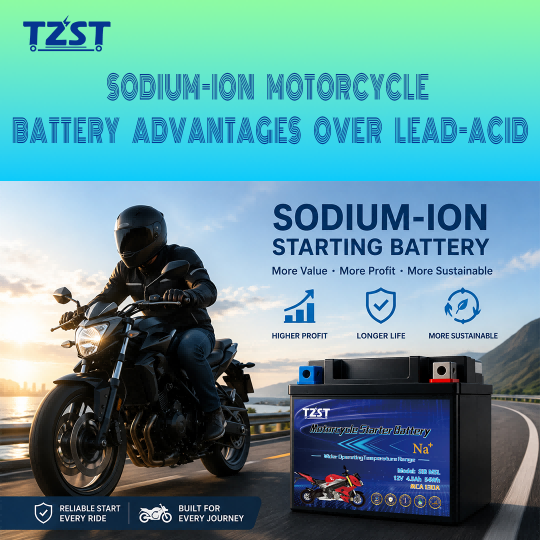
When you run a sodium ion vs lead acid motorcycle battery comparison for your retail teams, you only need to highlight three core benefits that end users can immediately recognize and value. First, sodium ion motorcycle battery units deliver far more reliable cold start performance, even in temperatures as low as -30℃, eliminating the frustration of failed starts that plague lead-acid options during cooler seasons. Second, these units have a far lower self-discharge rate, meaning they are far less likely to lose charge after sitting unused for extended periods, a common pain point for riders who only use their motorcycles periodically. Third, sodium ion motorcycle battery units are up to 40% lighter than equivalent lead-acid models, making them far easier for retail staff to lift, install, and stock in limited shelf space.
Another key advantage visible in any sodium ion vs lead acid motorcycle battery test is the longer cycle life of sodium-ion units. Independent lab testing shows that sodium-ion motorcycle batteries deliver 2x more charge cycles than comparable lead-acid options, meaning end users get far more value for their investment. This clear performance gap makes the sodium ion motorcycle battery a natural upgrade choice for riders who are tired of replacing their battery every 1-2 years. Unlike lead-acid units that lose performance after 12-18 months of regular use, sodium-ion models maintain consistent output for their entire service life, reducing end-user complaints and return requests.
How These Tangible Benefits Cut Through Retail Resistance
One of the biggest barriers to launching a new battery line is retail staff hesitation to promote products they do not understand. The simple, tangible benefits of sodium ion motorcycle battery units eliminate this barrier entirely, as staff do not need to explain complex chemical technology to end users. Instead, they can share the three core benefit points that riders care about most, with no special technical training required.
When you compare sodium ion vs lead acid motorcycle battery benefits side by side, there are no confusing technical terms required to show end users the value. Even entry-level retail staff can demonstrate the weight difference by letting customers hold both battery types, or show short video clips of side-by-side start performance in cold conditions. This simplified sales process means staff are far more likely to proactively recommend sodium ion motorcycle battery units to every customer that comes in looking for a replacement or upgrade.
Retail teams also appreciate that sodium ion motorcycle battery units require far less after-sales support compared to lead-acid options. The lower rate of performance degradation and reduced risk of drain from idle storage mean fewer customers return to stores with complaints about dead batteries, reducing the workload for retail staff and service teams. This reduced support burden further increases staff willingness to promote the product, as they know it will not create extra work for them down the line.
Turnkey Promotion Tools to Accelerate Sodium Ion Motorcycle Battery Sales
Ready-to-Use Sales Kits for Zero-Training Product Launches
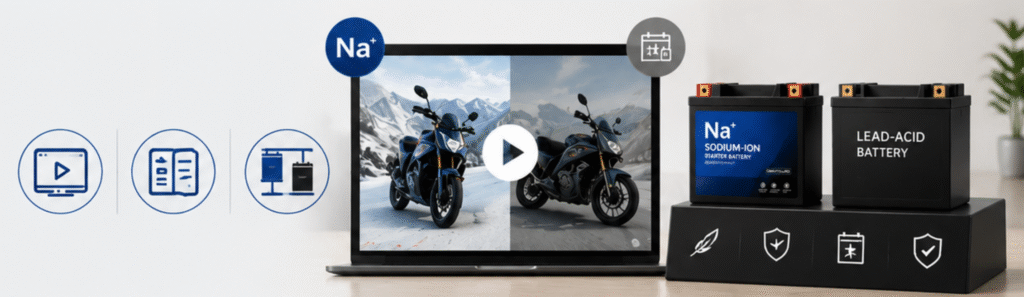
To make rolling out your sodium ion motorcycle battery line as seamless as possible, we provide a full set of visual sales resources that require no extra training for your retail teams. First, we offer high-quality comparison videos that clearly show side-by-side sodium ion vs lead acid motorcycle battery performance tests, including start performance, weight differences, and cycle life data. These videos can play on loop in retail locations, educating customers before staff even speak to them, reducing the sales effort required for each transaction.
Second, we provide pocket-sized sales cue cards with a simple four-point sales mnemonic: lighter, more powerful, longer lasting, no drain from sitting idle. These cards give every retail staff member a quick, easy reference to pull out when talking to customers, ensuring consistent messaging across all your sales locations. Third, we provide physical product display stands that hold both a sodium ion motorcycle battery and a comparable lead-acid unit, so customers can lift both themselves and feel the weight difference first hand.
These turnkey resources mean you can launch your sodium ion motorcycle battery line in as little as 72 hours, with no hours of training sessions required for your retail teams. Every element of the sales kit is designed to turn complex sodium-ion technology into simple, tangible benefits that customers can see and feel for themselves, eliminating the confusion that often slows down new product adoption. Data from 2025 channel partner trials shows that locations using these full sales kits saw a 47% higher initial adoption rate compared to locations that launched without supporting materials.

How to Reduce Inventory Backlog Risks for New Battery Lines
Many businesses avoid launching new product lines because of the risk of slow-moving inventory sitting in warehouses. The simplified sales process for sodium ion motorcycle battery units, paired with our turnkey sales resources, drastically reduces this risk by driving faster sell-through at the retail level. Data from our early partner channels shows that locations using our full sales kit see a 65% faster sell-through rate for sodium ion motorcycle battery units compared to locations that launch without supporting materials.
The clear, easy-to-communicate benefits shown in sodium ion vs lead acid motorcycle battery comparisons also make these products far easier to market across your entire sales network. You can share the same comparison videos and benefit points across your social media channels, email newsletters, and in-store displays, creating a consistent marketing message that reinforces retail sales efforts. This unified approach drives higher customer demand before they even step foot in a retail location, further reducing the risk of inventory sitting unsold.
For businesses looking to expand their product lines with a high-margin, high-demand offering, sodium ion motorcycle battery units are one of the strongest options on the market today. The clear performance advantages over lead-acid options, paired with turnkey sales resources that eliminate training burdens and reduce retail resistance, create a low-risk path to higher revenue and stronger customer loyalty.