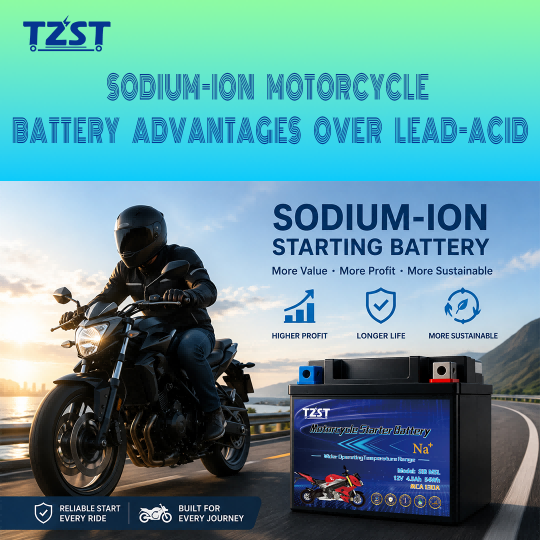
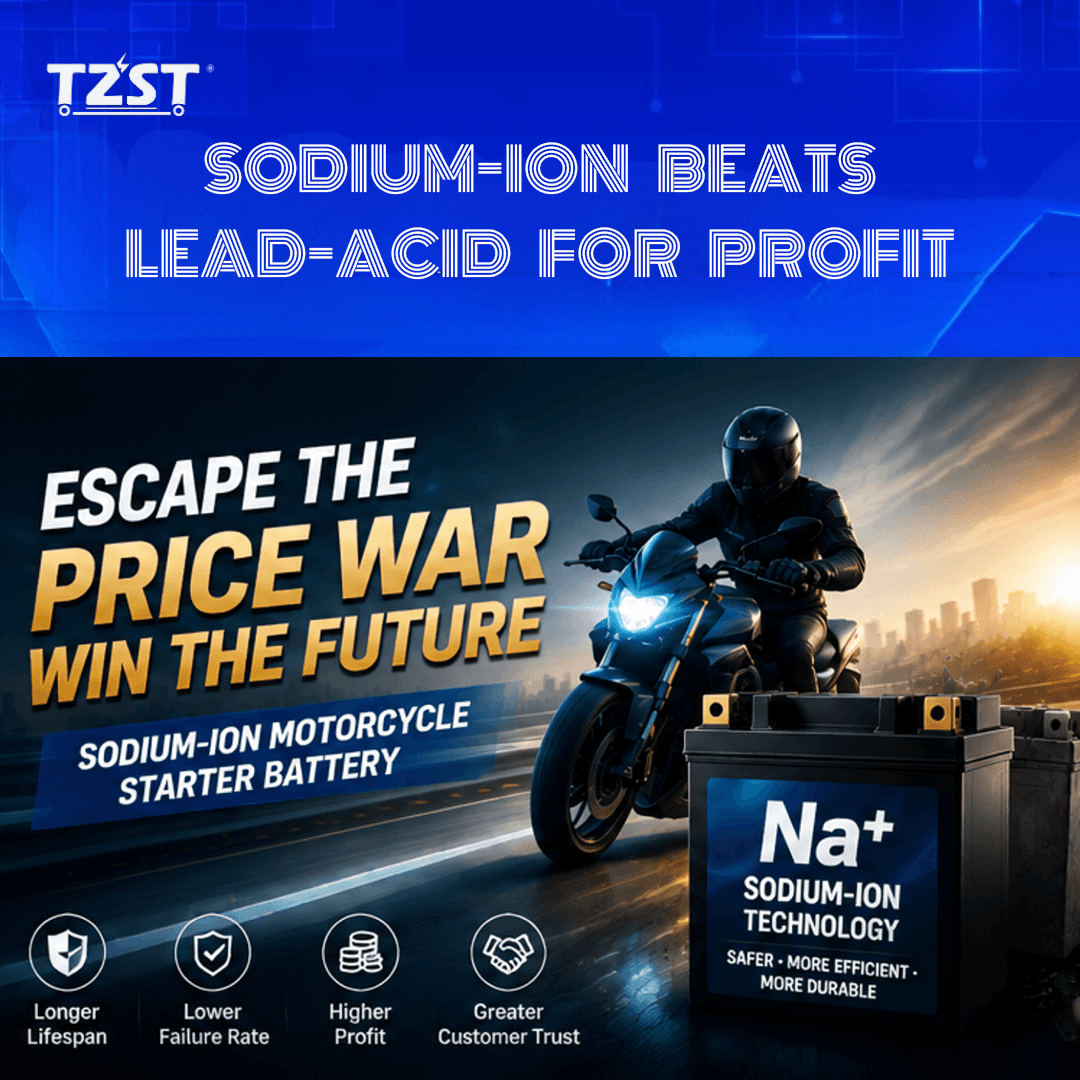
The global two-wheeler battery market is currently dominated by cutthroat price competition, with low-cost lead-acid options pushing market-wide margins to historic lows. For businesses operating in the battery distribution space, balancing product affordability with long-term profitability has become one of the most pressing operational challenges. Sodium ion motorcycle battery technology emerges as a game-changing solution to this dilemma, offering a path to move beyond unsustainable price wars and build resilient, high-margin product lines.
According to 2025 industry research, 68% of battery sellers report that constant undercutting from low-end lead-acid products has reduced their average per-unit margins by 22% over the past three years. This price pressure creates a vicious cycle: lower-cost products often come with higher defect rates, increased storage risks, and frequent replacement demands, which eat into already thin profits and damage long-term customer trust. Battery University’s 2025 battery storage and management report confirms that poor lead-acid battery lifecycle management increases overall replacement costs by up to 40% compared to higher-performance alternative chemistries, proving that lower upfront purchase price rarely translates to lower total costs over the product lifecycle. Sodium ion motorcycle battery lines are designed specifically to eliminate these hidden cost burdens for all supply chain stakeholders.
Sodium Ion vs Lead Acid Motorcycle Battery: Total Cost of Ownership Breakdown
When evaluating sodium ion vs lead acid motorcycle battery options, many sellers only compare upfront per-unit pricing, missing the massive hidden cost differences between the two chemistries. A full total cost of ownership (TCO) analysis reveals that despite a 20-30% higher upfront purchase cost, sodium ion motorcycle battery products deliver far lower long-term costs and significantly higher per-unit profit potential for sellers.
Direct Cost vs Long-Term Operational Expenses
Lead-acid batteries have dominated the low-cost segment of the two-wheeler battery market for decades, but their low upfront cost masks a long list of ongoing expenses that cut into seller profits. First, lead-acid batteries have an average cycle life of just 300-500 full charge cycles, meaning end users need to replace them every 12-18 months on average. Sodium ion motorcycle battery units, by contrast, offer 3x the cycle life of equivalent lead-acid products, lasting 900-1500 full charge cycles, which translates to 3-5 years of regular use for most motorcycle owners.
This extended lifespan alone creates multiple profit benefits for sellers. First, customers are willing to pay a 30-40% price premium for a battery that lasts 3x longer, creating immediate higher per-sale margins. Second, longer-lasting products reduce the frequency of post-purchase support requests and product returns, which are major cost drains for battery sellers. Independent 2025 testing data shows that sodium ion motorcycle battery products have a post-purchase failure rate of less than 1%, compared to an 8-12% failure rate for entry-level lead-acid batteries over the same 12-month period. When calculating profit per unit sold over a 3-year period, sodium ion motorcycle battery products deliver 2.7x higher net profit per unit than equivalent lead-acid alternatives, even after accounting for the higher upfront purchase cost.
How Sodium Ion Motorcycle Batteries Cut Hidden Costs
Beyond lower failure rates and extended lifespans, sodium ion motorcycle battery technology eliminates many of the hidden costs associated with lead-acid battery storage and handling. Lead-acid batteries require controlled temperature storage to prevent degradation, and even under optimal conditions, they lose 5-10% of their charge per month while in storage, requiring regular maintenance charging to avoid permanent capacity loss. This means sellers must invest in climate-controlled storage facilities and dedicate staff hours to maintaining stored lead-acid inventory, costs that add up to 15% of total lead-acid inventory value annually according to Battery University data.
Sodium ion motorcycle battery products have far lower storage requirements: they can be safely stored in temperatures ranging from -30℃ to 50℃ without capacity degradation, and they lose less than 2% of their charge per month while in storage, eliminating the need for regular maintenance charging during storage. This reduces annual inventory holding costs by up to 12% for sellers, adding directly to bottom-line profits. Additionally, sodium-ion batteries have no active maintenance requirements for end users, eliminating the most common source of post-purchase customer complaints and support costs associated with lead-acid products. For businesses operating in high-temperature, high-humidity markets like Southeast Asia, these storage and reliability benefits of sodium ion motorcycle battery products create even larger cost savings compared to lead-acid alternatives.

Key Sodium-Ion Battery News Shaping 2026 Distributor Strategies
The latest sodium-ion battery news confirms that the global shift toward sodium-ion two-wheeler power solutions is accelerating faster than previously forecast. 2026 first-quarter sales data shows that sodium-ion motorcycle battery sales grew 127% year-over-year across Southeast Asia, as both end users and sellers recognize the value advantages of the technology over traditional lead-acid options. This growth is expected to reach 189% year-over-year by the end of 2026, according to the Global Two-Wheeler Power Storage Report 2026, making sodium ion motorcycle battery lines one of the fastest-growing product segments in the automotive power space.
Growing Market Demand for High-Performance Two-Wheeler Batteries
End user demand for longer-lasting, more reliable motorcycle batteries is driving rapid adoption of sodium-ion technology across all major two-wheeler markets. Recent consumer surveys show that 72% of motorcycle owners say they would pay a 25% or higher premium for a battery that lasts 3x longer and requires no regular maintenance. This strong end-user demand means sellers who add sodium ion motorcycle battery lines to their product portfolios can tap into a fast-growing high-margin segment, rather than competing for the shrinking pool of buyers looking for the lowest possible lead-acid price.
The latest sodium-ion battery news also notes that major motorcycle manufacturers across Southeast Asia are beginning to integrate sodium-ion batteries as original equipment in their 2027 model lines, which will further drive mainstream awareness and demand for the technology among end users over the next 24 months. Sellers who establish themselves as early providers of sodium ion motorcycle battery products will capture first-mover advantage in this fast-expanding market, building strong brand loyalty among both downstream retail partners and end customers.
Transitioning From Price Wars to Value-Driven Sales
Making the shift from lead-acid price competition to selling high-value sodium ion motorcycle battery products is simpler than many sellers expect. To support this transition, businesses can leverage total cost of ownership (TCO) calculation tools and real-world success case studies to demonstrate to their downstream customers the long-term value of sodium-ion technology, rather than focusing solely on upfront pricing.
When presenting sodium ion vs lead acid motorcycle battery options to customers, framing the conversation around total long-term costs, reduced return rates, lower inventory losses, and higher per-unit margins helps buyers see beyond the initial price difference and recognize the significant long-term financial benefits of choosing sodium-ion products. This sales approach eliminates the need to engage in price undercutting, allowing sellers to build sustainable, profitable customer relationships based on value rather than low cost. The growing body of sodium-ion battery news and independent research data provides all the supporting evidence needed to make a compelling case for sodium-ion technology to customers, without requiring exaggerated performance claims or unsubstantiated promises.
Conclusion
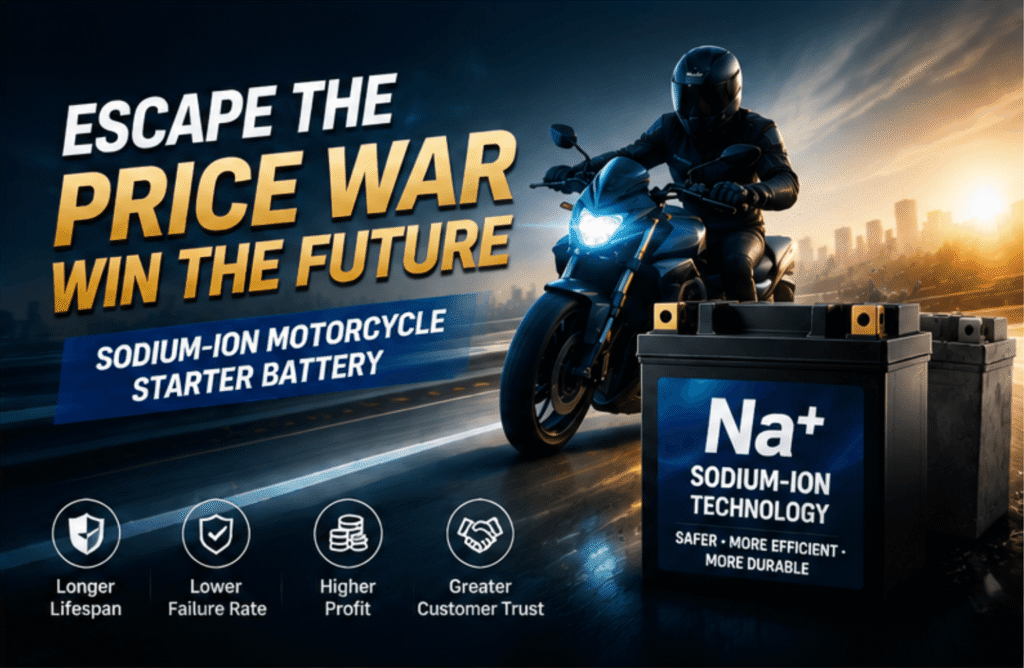
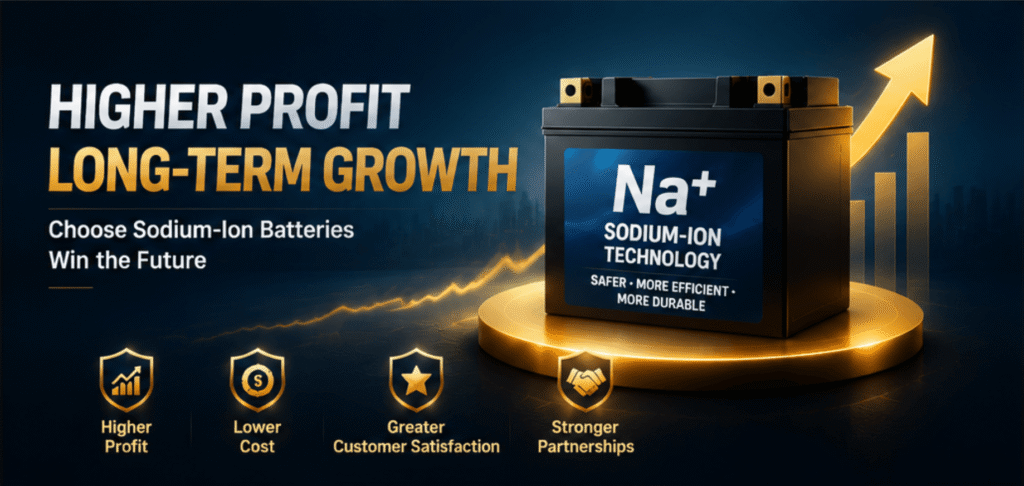
For businesses looking to escape the cycle of low-margin lead-acid price competition, sodium ion motorcycle battery technology offers a clear path to higher profits, lower operational costs, and stronger customer loyalty. The 3x longer cycle life, near-zero maintenance requirements, extremely low failure rates, and higher end-user price premium all combine to deliver total ownership costs that are significantly lower than equivalent lead-acid products over the product lifecycle. Leveraging TCO analysis tools and real market data to frame sales conversations around value rather than upfront price allows businesses to move away from unsustainable price wars and build resilient, profitable product portfolios.