Most people assume motorcycle battery issues only surface when a rider is stranded on the road, but that is never the full picture. The costliest problems tied to lead-acid motorcycle batteries start long before a unit ever powers a single ride, hiding in warehouse storage, on wholesaler shelves, and behind repair shop counters. For channel partners operating in warm, humid regions that hold the world’s highest motorcycle ownership rates, these climate-linked failures create massive hidden costs that eat into margins and damage customer trust. When evaluating sodium ion vs lead acid motorcycle battery options for your inventory, understanding how climate impacts product performance across the full supply chain is the first step to boosting your long-term profitability.
How Lead-Acid Motorcycle Battery Failures In Hot, Humid Markets Drain Channel Profits
Why High-Volume Motorcycle Markets Face The Worst Lead-Acid Performance Issues
The regions with the fastest growing motorcycle adoption rates almost all have tropical or warm seasonal climates, with consistent high temperatures and humidity for most of the year. These exact conditions speed up core degradation processes inside lead-acid motorcycle batteries, even when the units are sitting unused in storage. Most channel partners do not account for this climate-linked performance gap when they first stock lead-acid units, and the costs hit every part of their operation unexpectedly.
Unlike products that only face stress when in active use, lead-acid motorcycle batteries break down faster when stored in unconditioned warehouse or shelf spaces in warm, wet regions. Units that would sit stable for months in cooler, drier climates can lose functionality entirely before they ever leave a wholesaler’s shelf in these high-volume markets. This creates a cycle of wasted inventory and unnecessary work that grows more expensive as local motorcycle demand rises.
The Hidden Costs Of Climate-Related Lead-Acid Failures Across The Supply Chain
Every climate-related lead-acid failure creates costs at every step of the channel. Warehouse teams have to set aside regular time to test stored inventory, remove dead units, and adjust stock levels to account for unexpected waste. Wholesalers face constant returns from retail and repair shop partners who receive non-functional units, plus added logistics costs to ship replacement stock or process faulty returns. Repair shops bear the brunt of end-customer frustration, as riders return batteries that fail shortly after purchase with no obvious signs of misuse.
These costs add up far beyond the direct price of wasted inventory. Every hour warehouse or wholesale staff spend sorting through failed lead-acid units is an hour they cannot spend on higher-value tasks like serving new clients or expanding product lines. Repair shops lose repeat business when customers associate their brand with low-quality, unreliable products, even if the fault lies entirely with the lead-acid battery’s poor climate performance. Many channel partners only realize the scale of these hidden costs when they review quarterly financials and find unexpected inventory and customer retention losses tied directly to battery failures.
How Sodium-Ion Motorcycle Batteries Outperform Lead-Acid In Warm, Humid Climates
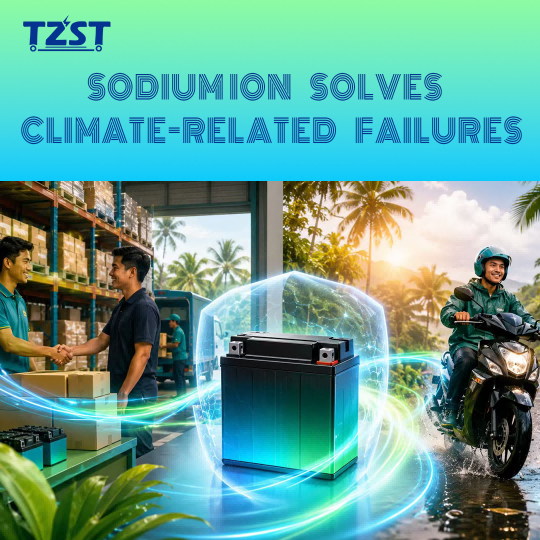
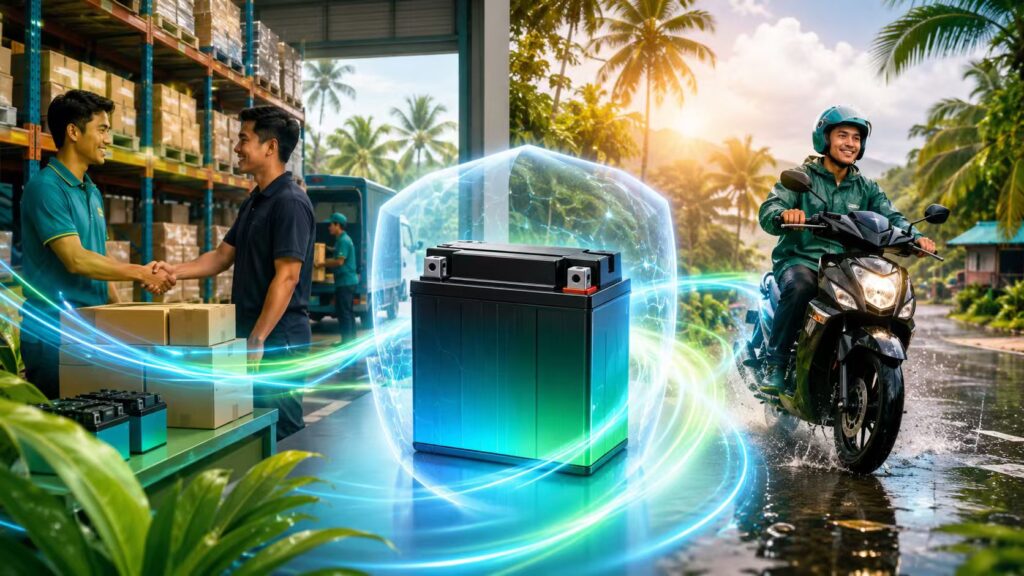
When comparing sodium ion vs lead acid motorcycle battery climate performance, the core difference lies in the underlying chemical design of the two products. Sodium-ion motorcycle batteries are built to remain stable across a far wider range of temperature and humidity conditions, with none of the rapid degradation risks that plague lead-acid units in warm, wet markets. This stability applies both when the battery is in active use on a motorcycle and when it is sitting unused in storage, eliminating the climate-related failure risks that create so much waste for channel partners.
Sodium-ion batteries do not require special climate-controlled storage to retain their functionality, so channel partners can store units in standard warehouse and shelf spaces without worrying about unexpected failure. This removes the need for costly climate control upgrades that many lead-acid suppliers recommend to reduce failure rates, cutting a major operational expense for partners operating in high-temperature regions.
TZST Sodium-Ion Batteries Reduce Operational Burden For Channel Partners
TZST sodium-ion motorcycle batteries are designed specifically to meet the needs of global high-volume motorcycle markets, with reliable performance that holds up across the most common local climate conditions. For warehouse teams, this means no more regular routine testing of stored battery inventory, and far lower rates of wasted dead stock. For wholesalers, this means drastically fewer return requests from retail and repair shop partners, and no need to account for unexpected inventory loss when planning stock levels. For repair shops, this means fewer frustrated customers returning faulty batteries, and higher customer satisfaction scores that drive repeat business.
Channel partners that switch to TZST sodium-ion motorcycle batteries report immediate reductions in operational costs tied to battery management, plus measurable improvements in customer retention rates. The reliable performance eliminates the unexpected costs that have long cut into margins for partners operating in warm, humid markets, making it far easier to scale your business alongside growing local motorcycle demand.
Core Benefits Of Switching To Sodium-Ion For High-Volume Climate Challenged Markets
Choosing sodium-ion over lead-acid units creates benefits that extend far beyond reduced climate-related failure rates. Sodium-ion technology also aligns with the growing preference for sustainable product options among modern riders, giving you a unique selling point to stand out from competitors that still rely on outdated lead-acid inventory. The low-maintenance design of sodium-ion units also reduces workload across your entire operation, freeing your team to focus on growing your customer base instead of fixing avoidable product issues.
TZST works closely with all channel partners to ensure a smooth transition to sodium-ion motorcycle battery inventory, with supporting resources to help your team explain the performance benefits to customers. Our products are built to fit the needs of distributors, wholesalers, and repair shops across all global high-volume motorcycle markets, with consistent quality you can rely on to build long-term customer trust.
Explore TZST’s full range of sodium-ion motorcycle batteries today to eliminate the hidden climate-related costs that come with stocking lead-acid units. Our solutions are designed to cut unnecessary operational burden and help you capture more value from the fast-growing global motorcycle battery market.